
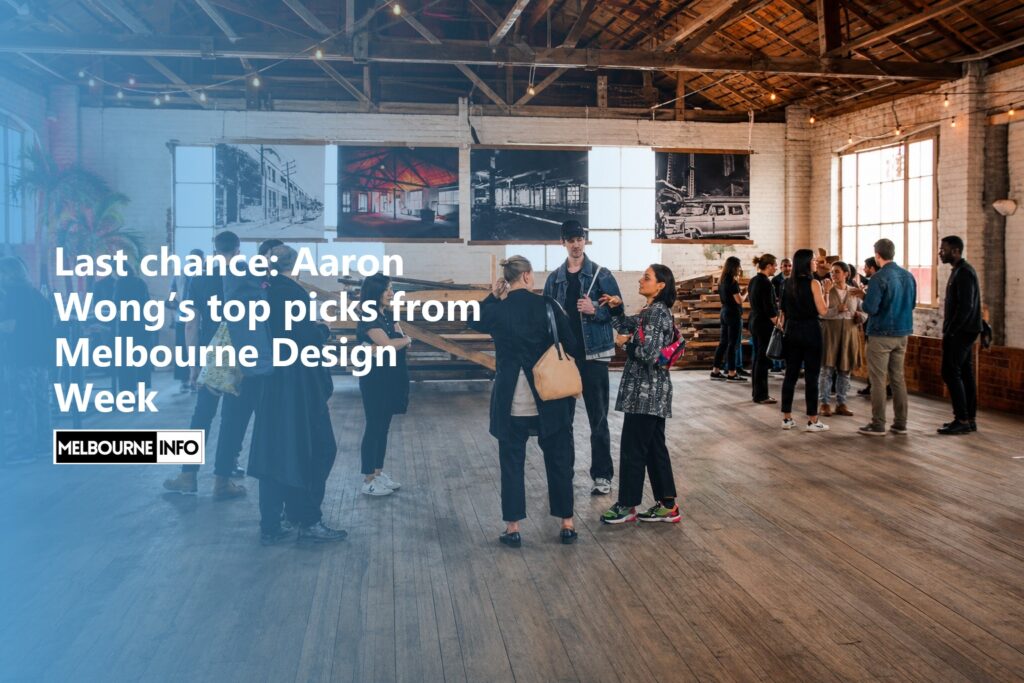
Walking into Abbotsford Convent during Melbourne Design Week, Aaron Wong felt something close to Sunday mass.
“A common thread I noticed throughout the week was a sense of shared experiences, a longing for connection, and a return to a tactile world of making, and even mess-making, with others,” the Studio Gardner designer wrote after touring the 2026 program.
The festival runs until 24 May, leaving Melburnians just five days to catch the exhibitions he describes as part of an intentional, interconnected design ecosystem. Most shows are free and open to the public, with major hubs at the Abbotsford Convent and the NGV drawing crowds across the city.
Wong’s Vogue Australia piece, published on 18 May, captures a mood that has emerged this year: design as a slow, communal act. “There was a welcoming sense of community throughout the week, joining like-minded people, and often some new ones, in spaces designed to connect, learn, and be inspired,” he wrote.
Aaron Wong, Studio Gardner, noted that Melbourne’s design scene felt “intentional, generous, and alive,” with makers and artists appearing across multiple galleries. That cross-pollination is on show at exhibitions like 100 Chairs, where over 100 makers responded to a single brief, and Synthesis by Studio Shields, which brings together more than 40 Australian artists exploring texture and layering.
If you want hands-on design, prioritise Adam Cornish: Domestic Experiments, an interactive installation at the NGV, or Table Manners, a meditation on cutlery and shared meals. Both shows invite visitors to slow down, sit, and participate rather than simply observe.
This year, the festival has turned away from polished digital presentations and leaned into imperfection and reuse, with patina and raw materials dominating the shows. Studio Gardner’s lens reveals a program of 100-plus makers across multiple venues – a collaborative energy you won’t find at a single-venue event.
Wong sees an ecosystem that feels alive because it’s made by people who live in Melbourne, for people who care about it. “Within Melbourne itself, the strength of the design community is obvious, with makers and artists’ works appearing across multiple galleries and showcases, creating a kind of interconnected ecosystem that feels intentional, generous, and alive,” he wrote.
The design week closes on 24 May. The chairs, the cutlery, the unfinished edges – they’ll be packed away. But the impulse to gather, tinker, and make a mess with others might stick around a little longer.
Quick Facts
Melbourne Design Week
Australia’s leading design festival held annually over 11 days in May across Melbourne and regional Victoria. It features talks, tours, exhibitions, launches and workshops at studios, galleries, universities and public spaces, celebrating Melbourne’s identity as Australia’s design capital.
National Gallery of Victoria
Victoria’s premier art museum and a key venue for Melbourne Design Week 2026, hosting major exhibitions and events that draw local and international audiences to the city’s creative scene.