
Melbourne’s original beach bohemia refuses to be one thing. St Kilda has been a gold rush playground, a glamour resort, a red-light district, a punk stronghold, an LGBTQIA+ heartland, and a gentrifying coastal precinct. Often all at once. That contradictory character is precisely what makes it work. The suburb carries layers that comparable destinations shed decades ago, and the history shows in pleasantly messy ways: Art Deco theatres next to backpacker hostels, fine dining metres from a 24-hour takeaway, a wild penguin colony nesting at the end of a pier flanked by fairground rides operating since 1912. Nowhere else in Melbourne fits this much into this small a space.
The contradiction is not accidental. It grew from 170 years of different people choosing St Kilda for different reasons: wealthy Melburnians building mansion retreats after the gold rush, artists and musicians moving into the subdivided remnants of those mansions in the 1950s, the LGBTQIA+ community establishing Fitzroy Street as one of Australia’s most welcoming streets in the 1970s, then successive waves of investment polishing but never quite smoothing the roughness underneath. Six kilometres from the CBD by tram, St Kilda is the version of Melbourne that visitors hold in their heads. The suburb earns that reputation rather than just trading on it.
| Feature | Summary |
|---|---|
| Known For | St Kilda Pier penguin colony, Luna Park, The Esplanade Hotel (The Espy), Acland Street cakes, Palais Theatre, beachfront dining |
| Best For | Music lovers, food seekers, beach day-trippers, LGBTQIA+ visitors, culture hunters, first-time Melbourne visitors |
| Atmosphere | Layered, energetic, genuinely eclectic: Art Deco glamour, live music grit, coastal ease |
| Distance from CBD | 6 km / 20 min by Route 96 tram (light rail) |
| Median House Price | $1,518,000 (2026); median unit $510,000 |
| Dining Scene | Excellent: fine seafood, Italian institutions, Thai, Sri Lankan, heritage cake shops |
| Local Character | Young professionals, creatives, LGBTQIA+ community, renters, musicians |
St. Kilda Suburb Map
Who It Suits
First-time Melbourne visitors who want to understand the city beyond the CBD will get more from a day in St Kilda than almost any other single suburb. The combination of beach, heritage amusement park, live music, wildlife, and food culture covers more of Melbourne’s identity in one postcode than anywhere else.
Music lovers should check gig guides before arriving. The Espy and Palais together represent one of the most active live music programmes in Australian hospitality. A weekend that aligns with a good act at either venue becomes the kind of Melbourne experience that people plan return trips around.
LGBTQIA+ visitors will find St Kilda consistently welcoming. Fitzroy Street has carried that identity since the 1970s, and the culture is established rather than performed. The neighbourhood’s inclusive character is in the fabric of the place.
Families with young children can build an excellent day around Luna Park and the Botanical Gardens, though peak summer weekends on the foreshore are genuinely crowded. A Tuesday or Wednesday visit in January is a different experience from a Saturday. Visitors looking for a quiet beach day with easy parking should consider Williamstown or Elwood instead. St Kilda is not a quiet suburb and does not pretend to be.
What Makes St Kilda Different
Most Melbourne suburbs have one or two identities. St Kilda has been accumulating them since 1850. The result is a suburb where you can walk from a wild penguin colony to a heritage roller coaster to a fine dining restaurant to a live rock pub in under 10 minutes, and none of it feels forced. The range is the point.
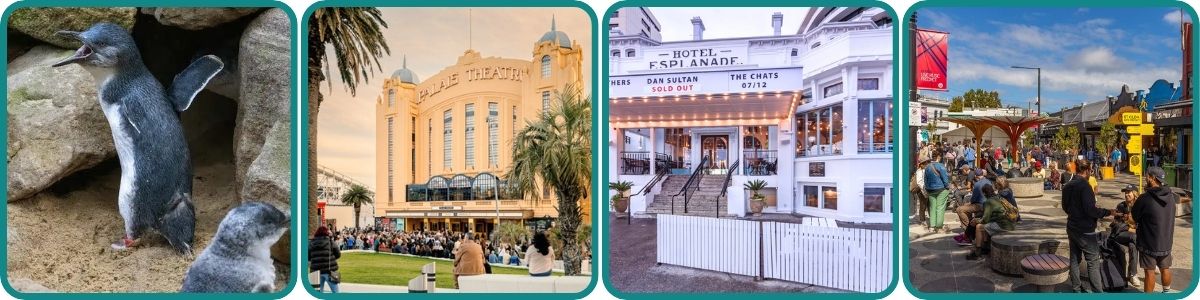
The penguin colony deserves particular attention because it is genuinely unusual. Approximately 1,400 Little Penguins nest in the breakwater rocks at the end of St Kilda Pier and return home from the bay each evening after sunset. This is not a tourist attraction built around wildlife: it is a wild urban penguin colony that has existed here for far longer than most of the suburb’s infrastructure. The new pier completed in late 2024 gives access a proper viewing platform without disturbing the colony. It remains one of the more extraordinary wildlife experiences available in any city in the world.
The live music culture goes deeper than The Espy’s reputation suggests. St Kilda was the neighbourhood that Nick Cave, The Go-Betweens, and most of Melbourne’s post-punk scene called home in the 1980s. The cultural weight of that period is still present, and The Espy’s revamp in 2025 amplified it rather than sanitising it. Twelve bars, the Gershwin Room, the Basement, and free live music seven nights a week in a 145-year-old building on the bay. That combination exists nowhere else.
Things to Do in St Kilda
St Kilda Pier Penguin Colony
Around 1,400 Little Penguins nest in the breakwater at the end of St Kilda Pier and come home each evening after sunset. The new 150-metre accessible viewing platform (opened December 2024, winner of the 2026 Urban Design Award) makes the experience far better regulated than before. Free, but ticketed: all tickets are released every Tuesday at 10am AEST via stkildapenguins.com.au. Sessions sell out within hours. There is no walk-up option. No dogs permitted. Speak quietly or the penguins turn and retreat into the rocks.
Luna Park Melbourne
In continuous operation since 1912, Luna Park is one of the world’s last surviving Victorian-era amusement parks. Entry through the iconic grinning face leads to the Scenic Railway, the oldest continuously operating roller coaster in the world, where a brakeman still rides every car. Park entry $30, unlimited ride passes from $55 adults. Open Friday evenings 6pm to 10pm, Saturdays 11am to 10pm, Sundays 11am to 7pm, plus Victorian school holidays. Book at lunapark.com.au. The ferris wheel view over Port Phillip Bay toward the CBD is the other reason to go.
The Esplanade Hotel (The Espy)
Operating in some form since 1878, revamped in 2025, and now housing 12 bars, the Gershwin Room, the Basement, and a kitchen open daily from noon. Free live music seven nights a week across multiple rooms; headline acts in the Gershwin Room are ticketed. The front bar faces Port Phillip Bay with uninterrupted sunset views. Open Mic Tuesdays in the Basement and Blues Sundays are free and frequently excellent. Check the current gig schedule at hotelesplanade.com.au.
Palais Theatre
Built in 1927 in Spanish Mission Revival style, the Palais is Australia’s largest seated theatre at 2,896 capacity. The Art Deco and Moorish interior is in near-original condition. Major national and international touring acts perform here; the acoustics are exceptional for the size. Mezzanine seats have the best sightlines. The exterior at night, lit against the bay, is worth photographing even on a non-event evening. Check the schedule and book at palaistheatre.net.au.
St Kilda Esplanade Market and Acland Street
Running every Sunday since 1970 along the Upper Esplanade, with 100-plus stalls selling handmade art, jewellery, ceramics, and clothing from Melbourne’s independent makers. Free entry, 10am to 5pm, all weather. Arrive before noon for the best selection. On Acland Street, Monarch Cakes has been baking Polish-style cheesecake from a century-old recipe since the 1930s, and Europa Bakery’s sour jam doughnuts are a St Kilda institution worth the trip independently. Go early on weekends to beat the queue.
Where to Eat and Drink
Donovans is the benchmark for beachfront fine dining: a converted bathing pavilion, white tablecloths, serious seafood (spanner crab ravioli, daily crudo), sweeping bay views. Book ahead at donovans.com.au.
Cafe Di Stasio has been the area’s Italian institution since 1987: white-jacketed service, seasonal Italian produce, technical precision without showiness. A reliable pre-Palais dinner at 31 Fitzroy Street. Bookings at distasio.com.au.
Charlong on Fitzroy Street serves homestyle eastern Thai cooking from chef Alex Kaew, based on her grandmother’s food stall recipes. One of the most talked-about recent St Kilda openings: proper Thai, not the tourist approximation.
The Walrus is a cosy vinyl-spinning oyster and natural wine bar. Fresh oysters and biodynamic whites, knowledgeable service. Book ahead on weekends.
Republica at the Sea Baths for a bay-facing breakfast. The terrace catches the morning sun directly across Port Phillip Bay. A reliable start to any St Kilda day.
What Locals Know
Penguin tickets release on Tuesdays at 10am sharp. Every Tuesday at 10am AEST, the following week’s viewing sessions go on sale at stkildapenguins.com.au. They sell out within hours. There is no walk-up option at any point. Most visitors who arrive without tickets learned this after the fact. Set a calendar reminder for Tuesday morning before your trip.
Sunday morning is the best version of St Kilda. Saturday night brings crowds and noise along Fitzroy Street. Sunday morning is a completely different suburb: Esplanade Market from 10am, Acland Street quiet enough to actually browse at 8am, dog walkers and cyclists on the foreshore before the weekend crowds arrive. That calm version of St Kilda is something most weekend visitors never see.
The Ngarree tree at Fitzroy and Queens Streets. A 500-year-old sacred gum used by Bunurong Elders as a meeting place for centuries. Plaques tell the story of the Bunurong people of the Kulin Nation on Wurundjeri country. It is one of Melbourne’s most significant Indigenous cultural sites and passes unnoticed by most visitors on their way to the Esplanade. Worth a five-minute stop.
The beach faces west. Come for sunset. St Kilda Beach gets crowded at midday in summer. The same beach at 6pm, with the light hitting the water from the west and the city skyline lit gold behind you, is one of Melbourne’s genuinely beautiful everyday moments. Free, no booking required.
What It’s Like to Live Here
St Kilda suits a specific type of resident: someone who wants urban coastal life, exceptional walkability, and a neighbourhood with energy rather than quiet, and who does not need a large home or reliable parking. It is not a family suburb in the traditional sense. It is a suburb for people who want to be inside Melbourne rather than insulated from it.
The tram case is strong. Route 96 (light rail) runs every 6 to 10 minutes from St Kilda Beach through to East Brunswick via the CBD, with journey times of approximately 20 minutes to Flinders Street. Routes 3 and 16 add additional CBD connections. The Bay Trail cycling route north toward Port Melbourne and the CBD is well-maintained and used daily by commuters. Driving is possible but parking is expensive, limited, and best avoided on weekends.
Property is split almost entirely between units and houses. Median unit price sits at approximately $510,000 with a rental yield of 5.73 per cent. Median house price is $1,518,000 with limited stock available. Rental competition is strong given proximity to the beach and CBD. Most residents rent rather than own, which shapes the neighbourhood’s transient-but-warm character. St Kilda still feels like a real neighbourhood rather than a lifestyle concept, which is the quality long-term residents cite when asked why they stay.
Noise on weekend nights is real. Fitzroy Street at 2am is an entertainment precinct in full operation. The side streets and residential blocks east of Fitzroy Street are significantly quieter, but St Kilda does not offer the calm of neighbouring Elwood. Families who want quiet streets and school catchments often settle in Elwood or Albert Park. The resident community is diverse, LGBTQIA+-friendly, and strongly identified with arts and creative industries.
Is It Worth It?
For a day trip: yes, without qualification. Take the Route 96 tram from the CBD, do the Esplanade Market Sunday morning, walk to the pier, have lunch on Acland Street, and return for penguin viewing at sunset (book the Tuesday before). That is a genuinely excellent day covering the best of the suburb without a car, without expensive bookings, and without repeating yourself.
For a music evening: yes, check the Espy and Palais calendars before you arrive. A good act at the Palais combined with dinner at Di Stasio or Donovans beforehand is a better evening than almost anything available at a comparable price point in a comparable coastal suburb anywhere in Australia.
For a quiet beach day: conditionally. On a weekday morning in autumn or spring, St Kilda Beach is beautiful and uncrowded. On a Saturday in January, it is neither. Williamstown or Elwood offer calmer alternatives on peak summer weekends.
For living here: yes, if the calculus works. The tram access, walkability, beach, dining, and cultural life are exceptional. The noise, parking challenges, and unit-dominated stock are the honest trade-offs. Most people who commit to St Kilda do not leave quickly.
Frequently Asked Questions
How far is St Kilda from Melbourne CBD?
St Kilda is 6 km southeast of Melbourne CBD. By Route 96 tram (light rail from Bourke Street Mall), the journey takes approximately 20 minutes. By car without traffic it is 10 to 15 minutes, though parking in St Kilda is expensive and limited. The tram is the recommended option. See the Melbourne trams guide for routes and Myki for ticketing detail.
Can you see penguins at St Kilda Pier?
Yes. A colony of approximately 1,400 Little Penguins nests at the breakwater at the end of St Kilda Pier and returns home from Port Phillip Bay each evening after sunset. Viewing is free but requires a pre-booked ticket. Tickets are released every Tuesday at 10am AEST at stkildapenguins.com.au and sell out within hours. There is no walk-up option. Dogs are not permitted.
Is St Kilda Beach safe for swimming?
Yes. Port Phillip Bay is enclosed so there is no surf: the water is calm, clean, and safe for children and casual swimmers. Lifeguards patrol weekends and public holidays from October to March. The beach faces west, making it exceptional for afternoon sunsets. Peak summer weekends bring significant crowds; weekday mornings are considerably more pleasant.
What is the best way to get to St Kilda?
Take Route 96 tram (light rail) from Bourke Street Mall in the CBD. It terminates at Acland Street, St Kilda Beach, in approximately 20 minutes. Route 16 from Swanston Street is an alternative. Both require a Myki card (tap on and off). Route 96 runs every 6 to 10 minutes throughout the day. For timetables and Myki details, see the Myki guide and Melbourne trams page.
What is the St Kilda Festival?
The St Kilda Festival is a 9-day annual event in February featuring free outdoor concerts, art installations, markets, and cultural events across the suburb. It is one of Melbourne’s largest free festivals. Check the What’s On St Kilda website for annual program dates and featured acts.
Is St Kilda safe to visit?
Generally yes. The foreshore, Acland Street, and daytime Fitzroy Street are very safe. Late-night Fitzroy Street around the entertainment precinct can be lively on weekends, as with any urban nightlife area. Exercise normal city awareness after midnight. St Kilda is one of Melbourne’s most LGBTQIA+-friendly suburbs and has a welcoming, inclusive character.