
South Morang used to be the end of the line, literally. When its station opened in April 2012, extending Melbourne’s electrified network 3.5 kilometres north from Epping, it was the first new electrified terminus in this corridor in almost 48 years, since Epping itself was electrified back in 1964. South Morang held that terminus status for a little over six years before the Mernda extension pushed the line further north in 2018, demoting it to a mid-line station on what’s now called the Mernda Line. That six-year window matters more than it might sound: it means South Morang had a full electrified commute to the city years before Mernda, Doreen or Wollert did, and it shows in the suburb’s character today, a genuinely more established, settled place than its newer growth-corridor neighbours, right down to a primary school that’s been running since 1877.
South Morang Boundary Map
South Morang sits in the City of Whittlesea, immediately south of Mernda on the same rail corridor, bordered by Mill Park and Bundoora to the south and Epping to the west.
Quick Facts
| Median House Price | Genuinely spread across sources, $775,000 to $832,000 depending on source and date, none primary-sourced with a firm release date; this profile reports the range rather than picking one |
| Median Unit Price | Around $511,000-$531,000 depending on source, with both sources roughly agreeing on a 2.8% annual rise even though the dollar figures differ |
| Population | 24,989 (2021 Census, whole-suburb figure); note that ABS also publishes much smaller North/South sub-area figures that shouldn’t be quoted as the suburb total |
| Growth Rate | Moderate and ongoing, though projected to run somewhat behind neighbouring Mill Park and Bundoora over a recent two-year outlook |
| Transport | South Morang station opened April 2012 as the electrified terminus, the corridor’s first new terminus in nearly 48 years; it became a mid-line station once the Mernda extension opened in August 2018 |
| Crime Rate (LGA) | City of Whittlesea: roughly 17,975 offences, up 1.6% for the year ending March 2026; South Morang notably did not appear among the LGA’s five highest-offence suburbs (Epping, Thomastown, Mill Park, Lalor, Mernda all ranked above it) |
| Childcare Availability | At least five standalone long day care centres identified locally, with daily fees ranging roughly $143-$183 |
| School Zone Quality | Morang South Primary School has operated since 1877, genuinely one of the oldest in the corridor; The Lakes South Morang College and Marymede Catholic College both established in the 2000s; no ranking data confirmed |
| Best For | Buyers wanting an established, settled suburb with a genuinely older infrastructure and schooling history than the newer growth suburbs further north |
Our Verdict
Buy here if you want the settled maturity of a suburb that’s had its train station and core infrastructure in place since 2012, along with schooling history stretching back to the 1870s, rather than a suburb still catching up on both fronts. If numerous choices for long walking trails, access to sports and nearby native parklands, and convenient retail are important, that’s another reason to consider her. Don’t buy here expecting the sharpest capital growth in the corridor: recent projections put South Morang’s growth trajectory behind both Mill Park and Bundoora, and its median price already sits meaningfully above Mernda’s.
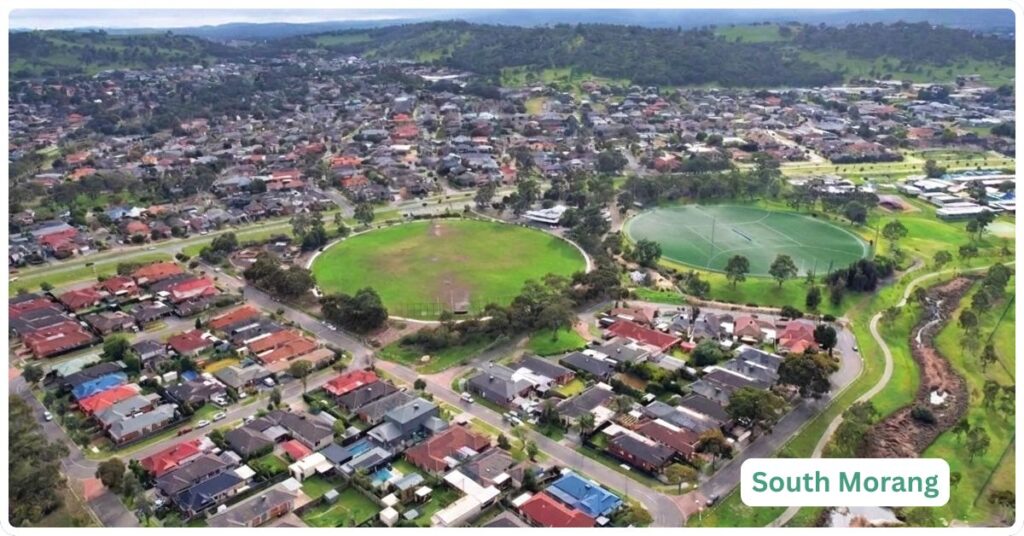
It suits buyers who want an established community with a genuinely long transport and schooling history without paying Bundoora or Mill Park’s higher entry prices. It’s a weaker fit for buyers chasing the cheapest entry point in the corridor or the newest possible housing stock, since Mernda, Doreen and Wollert all undercut South Morang on price precisely because they’re newer and further from the city.
Weighed against its neighbours, South Morang’s position is genuinely the middle ground. Against Mernda, immediately north and already covered in this series, South Morang offers a more established suburb and a shorter commute in exchange for a real price premium, roughly $65,000 to $70,000 more on the low end of the ranges found for each. Against Bundoora and Mill Park, both further south and more expensive again, South Morang is the relative value play for buyers still wanting a mature, settled suburb. Against Epping, South Morang appears to carry a meaningfully lower crime signal, notably absent from the LGA’s list of highest-offence suburbs where Epping ranks first.
The Backstory: Heritage & Origins
The area’s pre-suburban history runs deep: it was Wurundjeri balug and Wurundjeri Willam clan country before European settlement, explorers Hume and Hovell passed through the district in 1824, and European pastoral settlement of the Yan Yean district began in 1839, with most of the land occupied by pastoralists by the mid-1840s. Bear’s Castle, a bluestone and mud Gothic-style building constructed in 1848 by John Bear, remains a locally known heritage structure from this era. The area functioned as a working farm district right through to the 1980s, with the current suburban wave only beginning in the late 1990s and early 2000s.
South Morang’s name carries more nuance than a simple rename story. “Morang” is widely understood to derive from a Woiwurrung word meaning “sky” or “cloud”. While the nearby township of Morang was renamed Yan Yean South in 1893 before later becoming Mernda, South Morang retained its original geographic name, reflecting the area south of the former settlement.
Getting Around: Transport & Distances
South Morang railway station opened on 2 April 2012, extending Melbourne’s electrified rail network 3.5 kilometres north from Epping, with the Keon Park to Epping section duplicated at the same time. This was a genuine milestone: it was the first new electrified terminus in this corridor in almost 48 years, since Epping itself had been the terminus since electrification in 1964.
South Morang held that terminus status for a little over six years before the Mernda extension opened on 26 August 2018, adding three new stations, Middle Gorge, Hawkstowe and Mernda, further north. From that date, South Morang stopped being the terminus and became a mid-line station on what’s now called the Mernda Line, a status it retains today.
For people in the suburb, while they are blessed with three stations to choose from, none will likely be within walking distance, barring those living in certain areas on the eastern fringes. The 387 or 386 bus meets all three stations, and depending on where you start from, the journey takes between 15-35 mins. By car, it’s about 6 min to either from the middle of the suburb.
To the CBD via train, it’s a 55min journey from South Morang station. This is similar to the time by car, without traffic, via the M2/M80 or via Plenty Rd.
Plenty Road and McDonalds Road form the suburb’s main arterial spine, connecting South Morang to Epping, Mill Park and the wider corridor.
Crime and Safety, Honestly
The most current, best-sourced figure available shows 17,975 offences for the LGA, up 1.6%, for the year ending March 2026, with the prior year (to March 2025) recorded at 17,845 offences, itself up a sharp 29.3%. No current figure for Whittlesea’s “criminal incidents” as a distinct measure from offences could be confirmed. What is genuinely useful and suburb-specific: local reporting on the year ending March 2026 breaks out Whittlesea’s five highest-offence suburbs as Epping, Thomastown, Mill Park, Lalor and Mernda. South Morang didn’t appear on that list, implying a meaningfully lower offence count than those neighbours.
Schools and Childcare
Morang South Primary School has operated since 1877, its original bluestone building designed by Henry Robert Bastow, making it genuinely one of the oldest schools anywhere in this corridor and a real point of difference from the brand-new schools found in Mernda, Doreen and Wollert. The Lakes South Morang College, part of the Mill Park Lakes Education Precinct, was established in 2007 as a Prep-9 school before expanding to include VCE from 2019, with its first VCE cohort graduating in 2022, operating across a primary campus on Gordons Road and a secondary campus on Jardier Terrace. Marymede Catholic College, established in 2006, serves South Morang alongside Doreen, Mernda and the wider Whittlesea area as a Prep-12 co-educational option. No performance ranking data could be confirmed for any of these schools.
Childcare supply looks reasonable: at least five standalone long day care centres operate locally, with daily fees ranging roughly from $143 to $183, though individual quality ratings weren’t confirmed at the time of writing.
Get Outside: Parks, Attractions & Fitness
Hendersons Creek Wetlands is a wonderful native reserve with newly sealed trails offering a near-complete escape from the urban development that surrounds it. You can follow a trail north from here up Hendersons Creek Linear Park to Nicola Davis Conservation Reserve then loop back to the wetlands via “Scenic Terrace” totalling near 4km. For another long trail option, the wetlands also join to Vincent Recreation Reserve, Mirrabucca Wetlands, Red Oaks Park, and Hilcroft Park and again loops back via the Scenic Terrace to the wetlands.
Quarry Hills Park, Hillsview Recreation Reserve and Granite Hills Park provide playgrounds, kickabout spaces, sports facilities and walking paths. Fitness is well catered for too, with 24-hour gyms including Anytime Fitness South Morang, Powerhouse Gym South Morang 24/7, Revo Fitness – Plenty Valley and boutique training studios like Fitstop South Morang.
Just outside the east and south-eastern edge of the suburb is the Morang Wetlands and the broader Plenty Gorge Parklands, which locals use for walking, running, mountain biking, photography and wildlife spotting. The park features kilometres of trails through native bushland, wetlands and river valleys, with regular sightings of kangaroos and abundant birdlife.
North and west of the suburb is the newly redeveloped Bunjil Ngan’ga Parkland Quarry Hills (formerly Quarry Hills Bushland Park), offering a massive native bushland space that connects with neighbouring Mernda. The gentle hills to the west, Quarry Hills, offer superb lookouts, and the greater parkland offers five newly developed trails with more amenities expected to be added.
Shopping and Dining
Daily needs are well and truly taken care of by Westfield Plenty Valley, with roughly 183 to 200 stores anchored by Coles, Woolworths, Aldi, Target and Kmart, plus a 600-seat food court and around 2,230 car spaces, is the major regional retail centre serving the area, though it’s worth noting this centre technically straddles the South Morang and Mill Park boundary rather than sitting wholly within South Morang. South Morang Home near to Westfield offers big-box retail stores such as Bunnings, Amart and other retailers.
Central South Morang, on McDonalds Road, is a smaller, genuinely local centre anchored by Woolworths alongside specialty retailers. Mill Park Lakes area in the north of the suburb also features a Coles supermarket.
For a major retail outing beyond Westfield Plenty Valley, most people in the area head to the massive Northland Shopping Centre in Preston, about 15-20 mins by car.
What It’s Actually Like to Live Here
Grounded and family-centric, South Morang has almost everything people need within its boundaries. Locals make good use of the convenience South Morang offers, shopping and doing business locally, and spending their free time on the many local walking trails or exploring Plenty Gorge’s natural bushland.
South Morang’s 2021 Census profile shows a median age of 36, with the largest single age band sitting at 35-44, around 16% of the population, and roughly 28% of residents under 20 against about 11% aged 65 or over. India is the most common overseas birthplace, and Catholic is the most commonly reported religious affiliation at 36%. Median weekly household income sits at $2,078, with median weekly rent at $390 and median monthly mortgage repayment at $1,900. The average household holds 3 people and 2.1 vehicles, and there are 8,496 private dwellings recorded across the suburb.
Trade-offs & Points Worth More Research
The median house price genuinely can’t be pinned to a single figure: sources range from $775,000 to $832,000, a real spread of roughly $57,000, indicating there are many nuances to valuing homes in the area. Proximity to schools, parks, and rail comes into play along with the diverse nature of the housing stock. Growth here is projected to run behind both Mill Park and Bundoora over a recent two-year outlook, worth knowing for buyers specifically chasing capital growth. Crime data for the City of Whittlesea LGA remains only partly reconcilable between sources, and while South Morang’s absence from the LGA’s top-five highest-offence suburb list is a genuinely positive signal.
FAQ
Was South Morang once the end of the train line? Yes. It opened as the electrified terminus in April 2012 and held that status until the Mernda extension opened in August 2018, after which it became a mid-line station.
Is South Morang older than Mernda and Doreen? Yes, in terms of its main suburban development wave and its transport and school history. Morang South Primary School has operated since 1877, and the train station arrived six years before Mernda’s.
Is South Morang safe? City of Whittlesea LGA-wide data shows roughly 17,975 offences for the year ending March 2026, up 1.6%. South Morang notably didn’t appear among the LGA’s five highest-offence suburbs, though this is LGA-level data, not a precise South Morang-specific figure.
Is Westfield Plenty Valley in South Morang? It’s the major shopping centre serving the area, but it technically straddles the South Morang and Mill Park boundary rather than sitting entirely within South Morang.
References
- Australian Bureau of Statistics. 2021 Census QuickStats, South Morang (Vic.), SAL22311.
- Andrea Monti; HTAG; Your Investment Property Magazine; Jellis Craig-sourced comparison data. South Morang median house and unit price data, genuinely conflicting across sources.
- Crime Statistics Agency Victoria (via Star Weekly, 18 June 2026 report, and aucrimetracker.com secondary reporting). City of Whittlesea offence data, year ending March 2026, and suburb-level top-offence breakdown.
- Victorian Places; Millership & Co. South Morang and Morang naming history and pre-suburban heritage, including Bear’s Castle.
- Morang South Primary School (school history page); The Lakes South Morang College; Marymede Catholic College. School history and establishment dates.
- Railway Technology; Daniel Bowen (transport commentary). South Morang and Mernda rail extension timeline and opening dates.