
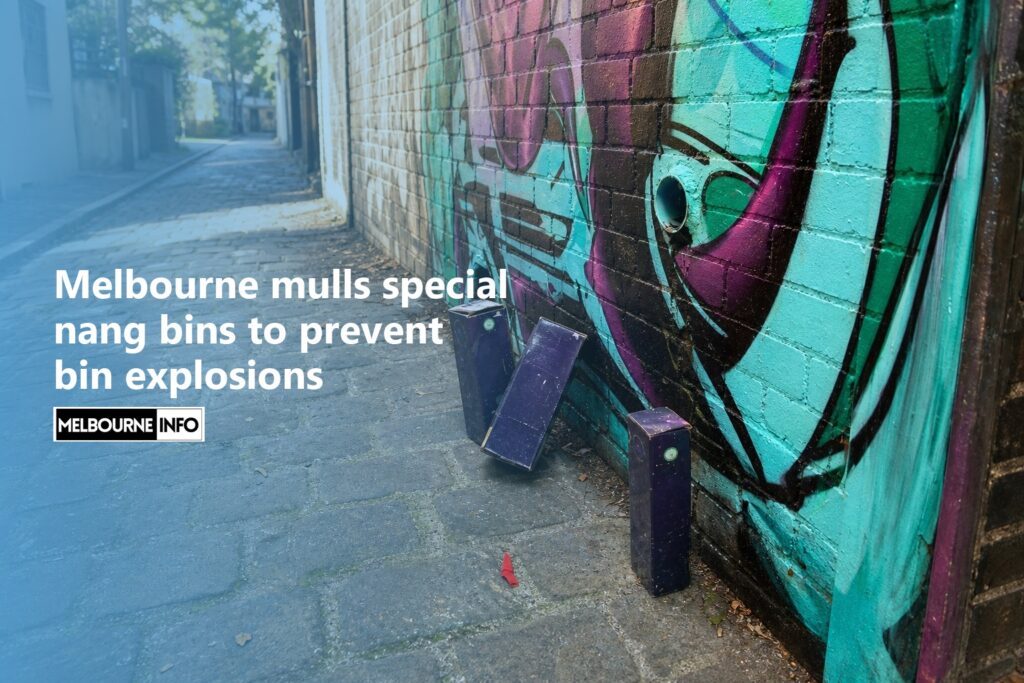
A single nitrous oxide canister in a public bin can turn a garbage truck compactor into a hazard. That’s why the City of Melbourne is urgently looking at installing specialised bins to collect the steel cylinders littering CBD streets.
The council already retrieves almost 50,000 discarded nangs each year. Tossing them in a regular public or household bin is illegal, with fines starting at $814 and climbing to $12,000. Larger 3-kilogram canisters, increasingly common, make the risks even higher.
For Brimbank volunteer Lisa Field, the problem is hard to miss. “I was shocked with the amount I’ve seen,” said Field, a member of the Brimbank Sustainability and Climate Action group. “Litter is a concern in Brimbank, but particularly [the canisters] because of the social harm … it must be more regulated.”
Recreational use of nitrous oxide has been linked to a spike in hospitalisations and neurological damage, especially among young people. The council is now treating the dumped canisters as both a waste and a public health crisis.
A spokesperson for the City of Melbourne said: “Council is advocating for a shared cross-agency response to nitrous oxide misuse, recognising it as both a waste management and public health issue.”
Plans for special collection points are designed to remove the explosion risk from regular rubbish collections. The canisters, if crushed in a truck compactor, can ignite residue gas, endangering sanitation workers. A dedicated bin network would keep them separate and safe until they can be taken to a specialist recycler.
One of the few facilities equipped to process them is ReSource in Derrimut, which has handled over 68.5 tonnes of nang waste since July 2025. Co-founder Troy Rowe explained that the material goes through batch processing to separate plastics, wrappers, brass and steel for recycling.
Suzanne Toumbourou, CEO of the Australian Council of Recycling, has called for manufacturers to bear the cost of disposal, similar to container deposit schemes. That would shift the financial burden away from ratepayers and onto the companies that produce the canisters.
If you come across a dumped canister, don’t touch it. The City of Melbourne asks residents to report them for safe removal. Businesses and households in the CBD can also expect to see dedicated nang bins in the months ahead, a quiet change that could make a big difference to safety.
The most common mistake is tossing the small canisters into the recycling. They are classified as hazardous waste; even one can cause an explosion in a bin collection truck. Larger 3kg tanks pose a double threat: they deliver a concentrated dose of nitrous oxide and are almost impossible to dispose of legally at home, so they end up dumped. A Brimbank City Council spokesperson warned: “Nitrous oxide canisters should never be left in public places or placed in household bins. We strongly encourage residents to dispose of them responsibly by taking them to an appropriate recycling facility.”
The 68.5-tonne mountain of nang waste processed in Derrimut is a raw measurement of a problem that has moved from weekend nuisance to full-blown municipal crisis. With a cross-agency response now on the table, the council’s message is that fixing it will need more than just new bins.
Quick Facts
City of Melbourne
The local government authority responsible for the central business district and surrounding areas of Melbourne, managing waste, public safety and urban services for residents and visitors.