
Geelong sits just under 75km from Melbourne, close enough for an easy day trip and established enough as Victoria’s second city to be worth a stay in its own right, with the Bellarine Peninsula and the start of the Great Ocean Road only a short drive further on. Getting there is normally simple: drive, train, or ferry. Right now it’s worth knowing two things before you plan around all three: the ferry service is currently suspended, and the train line has had a rough run through 2026.
Here’s the current, honest guide to getting from Melbourne to Geelong in 2026, plus what to expect once you’re there.
Melbourne to Geelong: comparison at a glance
Figures below are current as of late August 2026.
| Mode | Journey time | Distance | Approx. cost (one-way, adult) | Notes |
|---|---|---|---|---|
| Car (self-drive) | Around 1 hour | Around 75km | Roughly $10-12 in fuel each way, no toll on the direct route | Via the Princes Freeway (M1), the most reliable option right now |
| Train (myki, Geelong line) | 50-60 minutes | Around 75km | $2.85 (2-hour fare, currently halved) / daily cap $5.70 | Frequent and cheap, but 2026 has been a difficult reliability year, see below |
| Ferry (Port Phillip Ferries) | Around 2 hours 10 minutes (via Portarlington) | Around 60km | $25 weekday / $29 weekend one-way | Currently suspended, resuming weekends only from Saturday 5 September 2026 |
Why visit Geelong
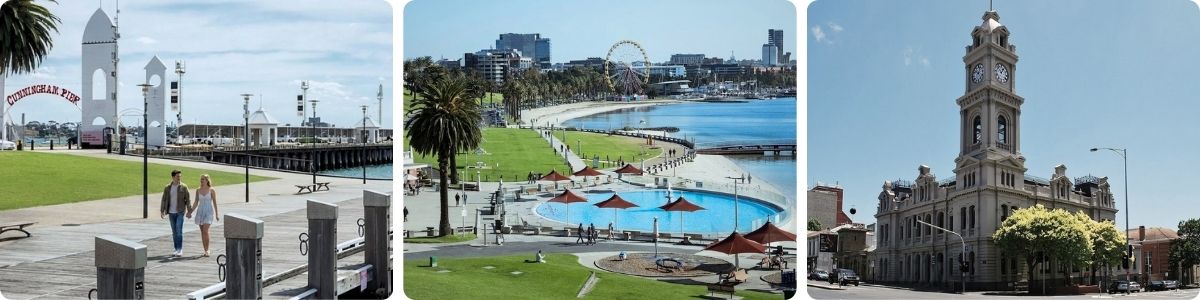
Geelong’s waterfront precinct does a lot of the heavy lifting: Eastern Beach’s netted swimming area, the heritage carousel, and a walkable promenade of cafes all sit a couple of minutes from the CBD shops. The National Wool Museum on Moorabool Street is a properly good half-day stop, especially with kids, and it’s all walkable from Geelong Railway Station, so a car isn’t essential for a day trip to the waterfront itself.
Beyond the day-trip case, Geelong works well as a base for exploring the Bellarine Peninsula (Queenscliff, Ocean Grove, Barwon Heads, Portarlington) and the start of the Great Ocean Road at Torquay, only around 20 minutes further on, so you’re not doing the Melbourne leg twice in one day if you stay a night or two. There’s development on the horizon too: the new Nyaal Banyul Geelong Convention and Event Centre on the waterfront was expected to open in 2026, and the council has been pushing a $140 million redevelopment of Geelong Arena into an 8,000-seat events and sports hub, though neither project’s exact timeline was confirmed at the time of writing, so check current status before building a trip around either.
How to go by car (self-drive)
Take the West Gate Freeway and Princes Freeway (M1) straight through to Geelong. It’s around an hour for roughly 75km, and the direct route isn’t tolled, tolls only apply if you specifically divert through the West Gate Tunnel, which opened in December 2025 as an alternative route via Footscray Road and Dynon Road (light vehicle toll around $4.22 if you use it).
This is normally a straightforward, well-used commuter corridor, but it’s not immune to single-incident chaos: a road damage incident near Werribee in mid-2025 turned a usual 60-90 minute trip into 2-2.5 hours for thousands of commuters. That’s not a regular occurrence, but it’s worth checking VicTraffic’s live disruption page before you leave if you’re on a tight schedule, since one incident on this freeway can back up for kilometres.
For those driving an EV, Geelong itself has a decent spread of chargers, including 22kW Type 2 units at the Western Beach Road/Cunningham Pier forecourt and further infrastructure at Waurn Ponds, Drysdale, Leopold and Armstrong Creek, with new council-funded chargers going into Belmont and Corio. No public fast charger was confirmed at Little River or Lara along the freeway route itself, so if you’re relying on a top-up en route, check PlugShare or Chargefox for current locations rather than assuming.
For those travelling with kids, the waterfront cluster works well as a family day out: Eastern Beach’s netted swimming area and playgrounds, the carousel, and the National Wool Museum’s kids’ activities (a wool-stencil station, a 3D shearing shed model, and a craft room with LEGO and soft toys on the top floor) are all within a short walk of each other. Parking near the CBD attractions is limited, more than one visitor has found the signage confusing, so the Westfield Geelong car park across from the Wool Museum is the more reliable fallback than hunting for street parking.
How to go by train (myki)
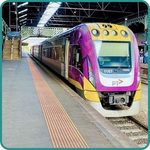
Trains run from Southern Cross Station roughly every 20-30 minutes at peak, similar on weekends, taking 50 to 60 minutes under the current (23 August 2026) V/Line timetable. This route runs on myki, not a separate V/Line paper fare, so it’s currently $2.85 for a 2-hour fare or $5.70 daily cap under Victoria’s half-price public transport scheme, reverting to $5.70/$11.40 once that scheme ends on 1 January 2027.
Getting on at Southern Cross Station is fairly straightforward, just follow the information signs to the right area and listen for the boarding call. Geelong station is even simpler. This line uses the VLocity trains which generally offer 12 wheelchair bays and 6 spaces for bicycles.
Here’s the honest part: the Geelong line has had a properly difficult year. It’s missed V/Line’s punctuality target every month since November 2025, and “short-stopping” (trains terminating early and leaving Waurn Ponds-bound passengers stranded) was logged 196 times between May and July 2026 alone. V/Line added 40 extra weekly services from 23 August 2026 in response, so things may be improving, but check the app for live disruptions before you travel, particularly at peak times. Transport Victoria’s Journey Planner gives current times and live disruption reports.
If you remember hearing about a Geelong Fast Rail project promising a 50-minute trip, it’s worth knowing that plan was officially scrapped by the federal government in 2023 after little progress. Geelong’s council is now focused on smaller, more achievable asks instead, restoring the old Geelong-Werribee rail link and building a short spur line to Armstrong Creek station.
How to go by ferry (Port Phillip Ferries)
As of late August 2026, the Docklands-Geelong ferry service is currently suspended, with the operator’s own site confirming it resumes weekends only from Saturday 5 September 2026. Once running, it departs Docklands at 10:40am, calls at Portarlington, and arrives Geelong around 12:50pm, a journey of roughly 2 hours 10 minutes, with fares at $25 one-way on weekdays or $29 on weekends (note this route is weekends-only, so the weekday fare applies to the Portarlington-only service, not the Geelong leg). Ferries aren’t covered by the half-price public transport scheme, so these fares are full price.
Check for updates at Port Phillip Ferries.
Visitor sentiment on the ferry is consistently positive on comfort, smooth crossings, comfortable seating, and an on-board licensed cafe come up repeatedly in reviews, though the cafe has been reported as cash-only at times. This is best thought of as a scenic, leisure-first way to travel rather than a practical commute option, given the limited weekend-only schedule and the roughly two-hour crossing time.
Local public transport at Geelong
Geelong’s waterfront and CBD attractions are walkable from the train station, so you don’t need a car for that part of a visit. To go further afield on the Bellarine Peninsula (Ocean Grove, Barwon Heads, Queenscliff, Drysdale, Portarlington), McHarry’s Buslines and CDC Geelong run routes hubbing at Geelong Station and the Moorabool Street interchange, all on myki, roughly hourly on weekdays and less frequent on weekends.
Geelong and the Bellarine’s bus network is currently under a formal government review, so routes and frequencies described here could shift, worth a quick check of current timetables before you rely on a specific service.
For something more novelty than practical, the Bellarine Railway runs a heritage steam train between Drysdale and Queenscliff on select dates through the year, a scenic add-on rather than everyday transport.
Should you take the car, train, or ferry?
Drive if reliability matters to your day. It’s the one option not currently affected by service disruptions, and at an hour with no toll on the direct route, it’s an easy trip.
The train is still the cheapest and most frequent option, and most days it runs fine, but 2026 has shown it can go seriously wrong at short notice. If you have a flexible day and want to save on parking and fuel, take it, just build in a buffer if you’re working to a fixed schedule.
The ferry is the one to plan around rather than default to right now, given the current suspension and its return to a weekends-only schedule. Once it’s running again, treat it as a scenic day-trip experience in its own right rather than a practical way to get from A to B, it’s slower than driving or the train and costs more, but it’s an entirely different way to arrive.
FAQ
Is the Melbourne to Geelong ferry running?
Not right now. As of late August 2026, the service is suspended and set to resume on a weekends-only basis from Saturday 5 September 2026. Check Port Phillip Ferries’ own site for the latest before planning around it.
Is the Geelong train line reliable?
It’s had a difficult 2026, missing V/Line’s punctuality target every month since November 2025, with a serious disruption event in April 2026 and an ongoing problem with trains terminating short of their scheduled stop. Extra services were added in August 2026 in response. Most trips run fine, but check for live disruptions before travelling if your schedule is tight.
Whatever happened to Geelong Fast Rail?
It was scrapped by the federal government in 2023 after little progress on the project. Geelong’s council is now focused on smaller-scale asks instead, including restoring the Geelong-Werribee rail link and a proposed Armstrong Creek station spur.
How much does the train from Melbourne to Geelong cost?
It runs on myki. Currently, under Victoria’s half-price public transport scheme, that’s $2.85 for a 2-hour fare or a $5.70 daily cap. Once the scheme ends on 1 January 2027, it reverts to $5.70/$11.40.
Do I need a car in Geelong itself?
Not for the waterfront and CBD, which are walkable from the train station. For the wider Bellarine Peninsula, McHarry’s and CDC Geelong buses run on myki, though the network is currently under review, so check current timetables before relying on a specific route.
Is Geelong a good base for the Great Ocean Road?
Yes. It’s the last major service centre before Torquay and the start of the Great Ocean Road proper, only around 20 minutes further on, and Geelong/Bellarine accommodation is generally cheaper and easier to book than staying right on the Great Ocean Road itself in peak periods.