
Warrnambool sits at the far end of the Great Ocean Road, close enough to Melbourne for a long day trip but really built for a weekend, especially between June and September when southern right whales swim in close to Logans Beach to calve. Whether you drive the coast road or take the direct V/Line train, this guide covers exactly how each option plays out, including a couple of things worth knowing before you book that most guides skip over.
Melbourne to Warrnambool: quick comparison
| Mode | Distance | Journey time | Approx. cost (one way) | Frequency | Best for |
|---|---|---|---|---|---|
| Car (direct, Princes Highway) | ~257km | ~3 hours | Roughly $35 to $45 in fuel for an average petrol car (check current prices, they vary daily) | Anytime | Flexibility, whale watching at your own pace, side trips |
| Car (full Great Ocean Road) | ~377km | 5.5 to 6 hours driving, more with stops | Fuel only, roughly $50 to $65 | Anytime | The scenic version, best done as an overnight rather than a straight run |
| Train (V/Line Warrnambool line) | ~257km by rail | Roughly 3 hours 15 minutes to 3 hours 35 minutes | Full-fare myki daily cap currently $5.70, concession $2.85, under Victoria’s half-price public transport period (1 June 2026 to 1 January 2027) | Around 5 return services on weekdays, fewer on weekends, check V/Line for the current count | No driving, no parking to worry about, currently the cheapest it’s been in years |
Why visit Warrnambool
Warrnambool is the practical, working end of the Great Ocean Road, a real regional city rather than a strip of holiday shacks, which means good coffee, a proper supermarket, and accommodation that doesn’t book out quite as fast as Lorne or Apollo Bay in summer.
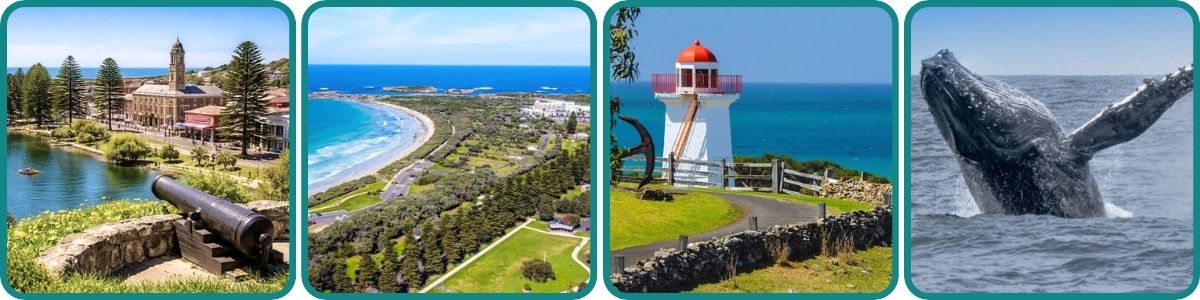
The drawcard from roughly June to September is Logans Beach, one of the few places on the Australian mainland where southern right whales reliably come in close enough to a viewing platform to watch a mother nurse her calf, and the platform is free and open at all times. Mind you, sightings aren’t guaranteed on any given day, the whales are wild animals on their own schedule, and Warrnambool’s own weather is cold and windy for most of the viewing season, so this isn’t a picture-postcard beach town in the way Lorne or Apollo Bay is.
Outside whale season, Flagstaff Hill Maritime Village recreates an 1870s coastal port around the site of an actual shipwreck museum, and Tower Hill Wildlife Reserve, a volcanic crater a short drive out of town, is one of the more reliable spots in Victoria to see wild koalas, emus and kangaroos in the same visit.
Treat it as a weekender rather than a rushed day trip if you can. It’s a genuinely long way to drive there and back in a single day just to see whales for twenty minutes, and Warrnambool works best as either the final stop on a proper Great Ocean Road road trip or a dedicated two-night whale-watching weekend timed to the season. If you’re deciding between bases, Port Fairy, about half an hour further on, is the prettier heritage-village option some travellers prefer to sleep in, day-tripping into Warrnambool for the whales, though it has far fewer beds and no whale site of its own.
How to go by car
There are several different routes, and two in particular offer vastly different experiences depending on whether you want to get there in good time or really enjoy what this amazing part of Victoria offers.
The direct route: Princes Highway/Freeway (M1/A1) via Geelong, Colac and Camperdown. Around 257km and roughly 3 hours in normal traffic, and the one to take if whale watching is the goal and you want to maximise time at the beach rather than behind the wheel.
The scenic route: the full Great Ocean Road via Torquay, Lorne, Apollo Bay and the Twelve Apostles. Around 377km all up and a genuine 5.5 to 6 hours of driving before you factor in the stops you’ll actually want to make, so treat it as a proper road trip leg with an overnight in Apollo Bay or Port Campbell, not a there-and-back-in-a-day route.
Road safety, hazards, tolls and police
- Tolls: none on the direct Princes Highway route. Melbourne’s West Gate Tunnel, which opened 14 December 2025, is tolled (around $4.22 for a car as of mid-2026, with a further $6.75 morning peak surcharge on some City West exits, and tolls adjust quarterly so check Linkt for the current price), but it’s optional, the original West Gate Bridge and Freeway remain toll-free for cars, so you can skip the tunnel entirely and pay nothing on this trip.
- Wildlife: kangaroos and wombats are a real hazard on the Great Ocean Road and the inland route alike, especially around dawn, dusk and after dark. Locals and Tripadvisor’s own Melbourne forum both flag this as a genuine risk for hire-car drivers unfamiliar with the road, slow down in signed wildlife zones and don’t swerve hard to avoid an animal, a controlled hit is safer than losing control of the car.
- The coast road itself: narrow, winding, and slower than it looks on a map, don’t expect to average highway speeds on the section between Anglesea and Apollo Bay. Tour buses and cyclists share the road, and there are genuine cliff-edge sections with limited overtaking. Parks Victoria has recorded summer peaks of around 15,000 visitors a day around Port Campbell National Park, which is why 40km/h zones now apply near the Twelve Apostles carpark from 11am to 6pm in peak periods, with roadside parking barriers and staff directing overflow traffic. Build in more time than GPS estimates suggest, especially in January and around Easter.
- Fatigue: whichever route you take, it’s a long stretch behind the wheel. Take a proper break roughly every two hours, Colac is the natural stop on the direct route with the widest choice of food.
- Landslip and works: the Fairhaven landslip on the coast road has a confirmed cause but its permanent fix is still awaiting funding as of 2026, so expect the possibility of reduced lanes or delays around that section. There’s also an active health advisory along the Great Ocean Road coast to avoid contact with sick or dead seabirds due to avian influenza, worth knowing if you’re stopping at beaches with kids or a dog.
- Police: both routes are actively patrolled, particularly the Princes Highway’s open sections where speed is the main temptation after a long, straight run. Victoria’s default full-licence blood alcohol limit is 0.05, zero for probationary and learner drivers, and mobile phone use while driving is illegal, pull over completely if you need to check a map or make a call.
Best stops and attractions en route
- On the direct route: Colac, for the widest range of food options and a lakeside foreshore with a playground if you’re travelling with kids and need to burn off energy halfway through the drive.
- On the coastal route: Torquay (surf culture and Bells Beach), Lorne (beach and the Erskine Falls walk, with playgrounds that double as a good stretch-the-legs stop), Kennett River (roadside koala spotting, minimal walking required), Apollo Bay, the Twelve Apostles and Loch Ard Gorge near Port Campbell, and Tower Hill Wildlife Reserve just before Warrnambool itself.
- Worth knowing if you’re doing the coast road: Port Campbell itself has very little dining open after around 8:30pm, so plan an earlier dinner stop if you’re pushing on to Warrnambool that night.
EV charging
Both routes are well enough travelled that fast chargers exist along the way, and Warrnambool itself has a reasonable spread: a 50kW Chargefox charger at the Flagstaff Hill carpark, a 250kW Tesla Supercharger on Gateway Road, and slower Type 2 chargers around town. Regional coverage on the way includes Evie chargers reported at Colac, Camperdown, Apollo Bay, Port Fairy and Portland. Coverage does thin out noticeably once you’re past Colac or Geelong though, and real-world reports from EV owners driving this corridor describe chargers showing as available in an app but actually out of order, or locked in a fault state after use, so don’t assume you’ll find a working charger on demand in a smaller coastal town.
Check the RACV app (it shows the Chargefox network with live availability and pricing) or PlugShare before you leave, both let you check for reported outages rather than turning up to a broken charger, keep a genuine buffer in your battery rather than planning to arrive at 5 percent, and have a backup charger in mind at a town with more than one option.
Travelling with kids by car
Families who’ve done this drive are honest that it’s longer with kids than Google Maps suggests, plan for closer to double the estimated time once you add stops, and carsickness on the coast road’s winding sections is a genuine, common complaint, so pack accordingly if that’s an issue for your kids.
Colac’s lakeside playground on the direct route and Lorne’s playgrounds and trampoline park on the coastal route are worth timing a stop around, and Kennett River’s roadside koalas are a reliable, low-effort wildlife win if the Twelve Apostles alone won’t hold their attention. Bring entertainment for the car and don’t expect a straight run, this is a trip that rewards treating the journey as part of the day rather than something to get through.
How to go by train
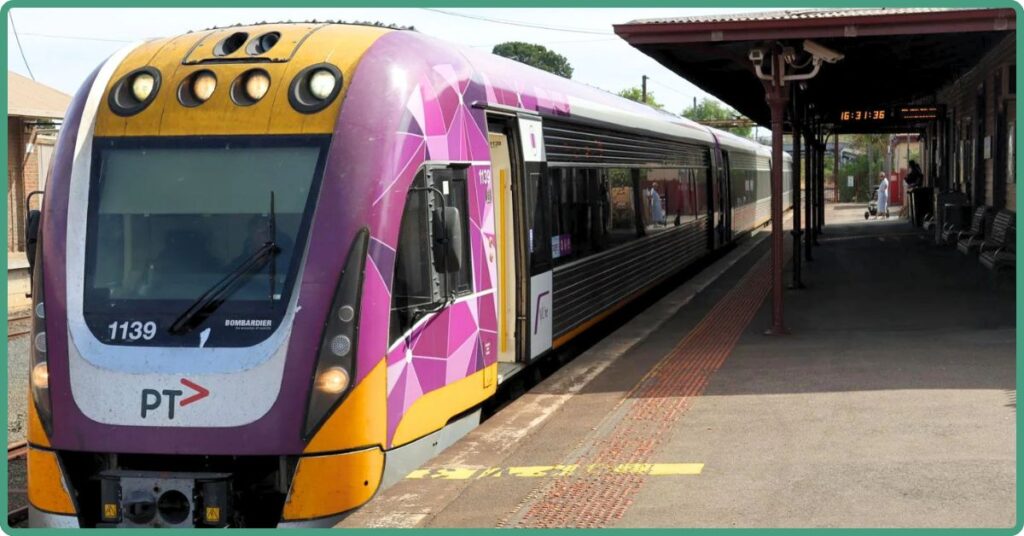
V/Line’s Warrnambool line runs direct from Melbourne’s Southern Cross Station via Footscray, Sunshine and Geelong (so you can also join from the Geelong line if you’re not starting in the CBD), then South Geelong, Marshall, Waurn Ponds, Winchelsea, Birregurra, Colac, Camperdown, Terang and Sherwood Park to Warrnambool.
A new timetable took effect from 1 February 2026, with around 5 return services on weekdays and fewer on weekends, journeys running roughly 3 hours 15 minutes to 3 hours 35 minutes depending on the service. Confirm the current departure times and exact service count on V/Line’s Warrnambool timetable page before you book, timetables and service counts on this line have changed more than once in 2026.
Trains are V/Line’s standard VLocity carriages, comfortable seating with tray tables, onboard toilets (two on newer units, one wheelchair-accessible), and luggage racks (32kg total across two bags plus hand luggage). There’s no buffet or servery car on the Warrnambool line, that’s specific to the Albury service, so bring your own food and drink for the trip as there’s nothing sold onboard.
Fares & Booking
Under Victoria’s half-price public transport initiative, running from 1 June 2026 to 1 January 2027, the myki daily fare cap that covers this trip is currently $5.70 full fare and $2.85 concession, about half the normal price, making the train a genuinely cheap way to do this trip right now.
V/Line has also periodically run replacement coaches on this corridor, for example on the Geelong and Warrnambool lines over the 27 August to 1 September 2026 period, when evening train services were affected. Check Transport Victoria’s current disruptions page before you travel.
Warrnambool station sits close to the town centre, an easy walk or short taxi ride to most accommodation, and Transit South West’s local bus routes connect from the station area if you’re not planning to walk everywhere. More on local buses further below.
Travelling with kids by train
The train removes the carsickness problem entirely and gives restless kids room to get up and walk the aisle, which a lot of families genuinely prefer over three-plus hours strapped into a car seat. Given no food is sold onboard, pack snacks and a refillable water bottle before you leave Southern Cross. Prams are accommodated where there’s room, conductor-assisted if needed, so board a little early to sort that out calmly rather than at the last minute.
How to go by bus
There isn’t a standalone commercial coach company running Melbourne to Warrnambool independently of V/Line. What V/Line does run is its own replacement and supplementary coach services on the same route, used when train services are disrupted or fully booked (see the fares section above), booked and ticketed the same way as a train seat through V/Line’s system. The experience is broadly similar to the train in terms of comfort, roomy coach seating and an onboard toilet, but no food service, so bring your own.
Local public transport at Warrnambool
Warrnambool is compact enough to walk around the town centre, but Transit South West (operated by Warrnambool Bus Lines) runs local routes connecting the station, the CBD, Flagstaff Hill and the outer suburbs if you’re staying further out or don’t want to walk to Logans Beach.
Check current routes and timetables directly at warbus.com.au or call (03) 5562 1866, since specific route numbers can change. Taxis operate from the town centre, and most accommodation and attractions are close enough together that a car isn’t essential once you’ve arrived.
Whale watching tips
The Logans Beach viewing platform is free and open at all times, an easy, flat access point with a ramp. There are no toilets at the platform itself, the nearest are around a kilometre away at the Hopkins River, so plan accordingly, especially with kids. Sightings genuinely aren’t guaranteed, and travellers who’ve been describe conditions honestly: it’s often cold and windy, whales can be anywhere from around 100 metres to a couple of hundred metres offshore, and a first-time visitor expecting a dramatic, close breach can come away disappointed if all you see is a flipper flash or a ripple. Bring binoculars if you have them, and it’s genuinely worth calling the Warrnambool Visitor Information Centre on (03) 5559 4620 before you set out to check whether whales have actually been sighted recently, rather than assuming being in the right season guarantees a sighting.
Should you take the car, train or bus?
If whale watching is the main goal, drive the direct Princes Highway route. Three hours each way is manageable in a long day, though a Saturday-to-Sunday overnight is genuinely more comfortable, and having the car means you’re not tied to a viewing platform’s opening hours or a tour’s schedule. If you’re doing the full Great Ocean Road as a proper multi-day trip and Warrnambool is simply where it ends, the scenic drive is obviously the point, don’t rush it, and don’t attempt it as a same-day return to Melbourne.
The train is, right now, genuinely the best-value option it’s been in years thanks to the half-price fare period, and it’s the better call if you’d rather not drive at all, you’re travelling solo, or you just want to read a book for three hours instead of watching the road. Just go in with realistic expectations about crowding, given the issues this line has had in 2026, book ahead and pick an earlier or midweek service if you can, especially with kids or if a guaranteed seat matters. It won’t get you along the coast road itself, so pair it with a local tour, the Whale Express, or a rental car at the Warrnambool end if seeing the Twelve Apostles is part of the plan. For most visitors without a car who specifically want the coast road included, a 2-day Great Ocean Road tour is the simplest single option, since it handles the driving, the stops and the whale watching in one booking.
Frequently asked questions
Is there a direct train from Melbourne to Warrnambool?
Yes, V/Line runs direct services from Southern Cross Station, roughly 3 hours 15 minutes to 3 hours 35 minutes, with around 5 return services on weekdays and fewer on weekends. Check the current timetable directly with V/Line, as service counts have changed more than once during 2026.
How long does it take to drive from Melbourne to Warrnambool?
About 3 hours (257km) on the direct Princes Highway route. Taking the full, scenic Great Ocean Road instead runs to 5.5 to 6 hours of actual driving, closer to a full day once you add stops, and is best done as an overnight trip rather than a straight run.
Can I see the Twelve Apostles on the way to Warrnambool?
Only if you take the coastal Great Ocean Road route by car or a Great Ocean Road tour bus. The direct Princes Highway drive and the V/Line train both bypass the coast road entirely, so pair either of those with a side trip, a local tour, or a hire car at the Warrnambool end if seeing the Apostles matters to you.
When is the best time to see whales at Logans Beach?
Roughly June to September most years, though sightings have started as early as late May in 2026. There’s no guarantee on any given day, so call the Warrnambool Visitor Information Centre before you travel to check on recent sightings.
Are there tolls on the way to Warrnambool?
No, not on the direct Princes Highway route. Melbourne’s West Gate Tunnel is tolled but entirely optional, the older West Gate Bridge and Freeway stay toll-free, so you can avoid paying anything on this trip.
Is the V/Line train to Warrnambool reliable?
Mostly, but it’s genuinely worth knowing that the line saw real overcrowding issues in 2026 after seat reservations were removed during Victoria’s free and half-price transport period, and V/Line has periodically used replacement coaches on this corridor. Book ahead, favour an earlier or midweek service, and check Transport Victoria’s disruptions page before you travel.
Can I fly to Warrnambool?
No, Warrnambool has a small regional airport but no scheduled commercial passenger flights. Fly into Melbourne or Avalon and continue by car or train.
Is Warrnambool worth visiting outside whale season?
Yes. Flagstaff Hill Maritime Village and its evening sound and light show, and Tower Hill Wildlife Reserve for reliable wild koala, emu and kangaroo sightings, both work year-round and don’t depend on whales showing up.