
The Bellarine Peninsula covers a whole string of destinations rather than one town, Drysdale, Portarlington, Indented Head, St Leonards, Queenscliff, Ocean Grove, Point Lonsdale, Barwon Heads and Wallington among them, all within easy reach of Geelong on the peninsula’s eastern side. It’s one of the few Melbourne getaways you can genuinely reach by car, ferry or train, and which one suits you depends heavily on where exactly on the peninsula you’re headed.
Melbourne to the Bellarine Peninsula: quick comparison
| Mode | Journey time | Approx. cost (one way) | Frequency | Best for |
|---|---|---|---|---|
| Car | ~1 hour 15 minutes to Geelong, longer to further points | $13-$22 Fuel only, no tolls | Anytime | Exploring multiple peninsula towns in one trip |
| Ferry (Port Phillip Ferries) | ~1 hour 10 minutes to Portarlington, ~1 hour 30 minutes to Geelong | Adult from roughly $23.50 one way to Portarlington | Several sailings daily to Portarlington, weekend and school-holiday service to Geelong | A genuinely scenic, car-free way in, especially for Portarlington itself |
| Train + bus | ~1 hour to Geelong plus local connection | from $4 (with weekend cap, more below) | Frequent daily Geelong trains | Reaching Geelong or a specific town with a good local bus connection |
Why visit the Bellarine Peninsula
Each town on the peninsula has its own personality. Queenscliff is the historic drawcard, Victorian-era buildings, the Queenscliff-Sorrento car ferry across Port Phillip Bay, and a genuinely good food scene.
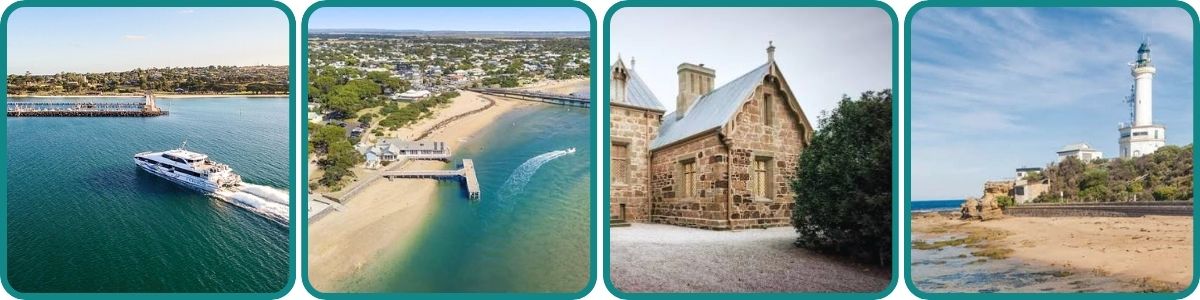
Portarlington and St Leonards face into the calmer bay side, good for swimming and fishing, while Ocean Grove, Point Lonsdale and Barwon Heads sit on the surf coast side with proper ocean beaches and a younger, beachier feel. Drysdale is the peninsula’s inland hub for shopping and services, and the whole region has developed into genuine wine country, with a growing number of cellar doors worth building a day around.
The Bellarine works equally well as a day trip focused on one or two towns, or a proper weekender if you want to cover more ground, swap between the bay and ocean sides, and fit in a few cellar doors. Given how spread out the towns are, decide roughly which corner of the peninsula you’re prioritising before you go rather than trying to see all of it in a single day.
Route Map
How to go by car
The M1/Princes Highway runs straight to Geelong, around 1 hour 15 minutes, where you turn onto the Bellarine Highway and continue on to whichever specific town is your destination. Having a car is genuinely the easiest way to see more than one peninsula town in a day, since the towns are spread out enough that walking or waiting on local buses between them adds real time.
Road safety, hazards and tolls
- Tolls: none on this route. Melbourne’s West Gate Tunnel, opened December 2025, is tolled (around $4.09 for a car) but optional, the existing West Gate Bridge and Freeway remain toll-free.
- Traffic: expect congestion through Geelong itself and around the peninsula’s beach towns on summer weekends, when the population multiplies. Arrive early for an easy park in Queenscliff or Barwon Heads on a hot Saturday.
- Police: this stretch is well patrolled, particularly the freeway sections into Geelong. Standard Victorian limits apply, 0.05 BAC for a full licence, zero for probationary and learner drivers, mobile phone use while driving is illegal.
Best stops and attractions en route
Geelong’s waterfront and Eastern Beach are worth a browse if you have the time before continuing on. Once on the peninsula, the growing cellar door scene around Drysdale and Bellarine’s wine region is worth a detour if you’re not driving straight through, and Queenscliff’s historic main street rewards slowing down rather than treating it as a drive-through stop.
EV charging
Geelong has reasonable charger coverage, and the larger peninsula towns like Queenscliff and Ocean Grove generally have at least one charger, but don’t assume one will be free and working on a busy weekend without checking. Check the RACV app (Chargefox network, real-time availability and pricing) or PlugShare before you leave, both flag reported outages, and top up in Geelong as your safety margin before heading further onto the peninsula.
How to go by ferry
This is genuinely one of the more enjoyable ways to reach the Bellarine, and it’s still running in 2026. Port Phillip Ferries operates from Docklands to Portarlington, around 70 minutes each way, with an adult fare of roughly $23.50 one way or $47 return off-peak, and several sailings a day, a typical weekday pattern runs Portarlington to Docklands around 7:15am and Docklands to Portarlington around 9:30am, with more services through the day.
There’s also a Docklands to Geelong route via Portarlington, about 2 hours 10 minutes, currently running weekends year-round (Docklands departs around 10:40am, Geelong departs around 4pm) plus weekdays during school holidays, with an adult fare of roughly $29 one way or $58 return at peak or weekend rates.
The ferry itself is a genuinely comfortable way across the bay, indoor and outdoor seating, and it drops you right in Portarlington or Geelong’s waterfront rather than requiring a drive. From Portarlington, local buses (see the route map below) connect on to the rest of the peninsula if that’s not your final stop. Check current timetables at portphillipferries.com.au before you travel, since sailings shift with the season.
How to go by train (plus bus)
V/Line’s Geelong line runs frequently from Southern Cross Station, roughly every 20 to 40 minutes at peak times and at least hourly through the day, taking around an hour to reach Geelong. Myki is accepted, and no booking is required. The adult fare is Weekday Daily Cap (Full Fare): $5.70 (Normally $11.40) and Weekend & Public Holiday Daily Cap: $4.00. Use the journey planner to plan the journey.
From Geelong Station, local buses and taxis connect on to specific Bellarine towns, see the bus route map below for coverage, though frequency varies significantly by destination, Portarlington and Drysdale are well served, while smaller towns further out may need a taxi or rideshare for the final leg.
Local public transport on the Bellarine Peninsula
Local bus routes connect Geelong to the main Bellarine towns, with the best frequency to Drysdale and Portarlington and thinner coverage further out toward Barwon Heads and Point Lonsdale. For example, bus 60 takes you from Geelong Station to Drysdale in about 25 mins and Portalington in about 35 mins. Bus 55 takes you to Barwon Heads in about 35 mins, and that same bus takes you to Ocean Grove in about 50 mins from the station.
Myki is accepted, and the fare is $4 (note, if used on the same day, the train and bus will be combined and capped at $5.70 on weekdays or $4.00 on weekends for the entire journey until Jan 1 2027).
Each town centre itself is easily walkable once you’re there, but getting between towns without a car generally means working around the local bus timetable or booking a taxi, plan your day around one or two towns rather than trying to bus between several in an afternoon.
McHarry’s Buslines (myki accepted) provides public transport bus services throughout Geelong, the Bellarine Peninsula and Surf Coast.
Travelling with kids
The Bellarine is an easy family destination with options for every age. Ocean Grove and Barwon Heads have patrolled surf beaches, Portarlington and St Leonards offer calmer bay swimming better suited to younger kids, and Queenscliff’s maritime museum and the car ferry across to Sorrento both tend to hold kids’ attention well. If you’re taking the ferry from Docklands, factor in that it’s a genuine outing in itself for younger children, build in time to enjoy the crossing rather than treating it as a means to an end.
Should you take the car, ferry, or train and bus?
Drive if you want to see more than one peninsula town in a day, the towns are spread out enough that a car makes far more sense once you’re on the ground. If Portarlington specifically is your destination, or you simply want a more scenic and relaxed way across the bay, the ferry is a genuinely good option and arguably the highlight of the trip in its own right, just check the current timetable first since the Geelong route isn’t a daily year-round service. The train to Geelong is the sensible default if you’re headed somewhere with good onward bus coverage from there, Drysdale and Portarlington both work well this way, but for the beach towns on the surf coast side, Ocean Grove, Point Lonsdale and Barwon Heads, driving remains the most reliable option.